Job site delays occur when equipment dispatchers fail to commit to exact delivery windows, leaving painting crews, commercial glaziers, and siding sub-contractors waiting curbside. For elevated exterior maintenance on…
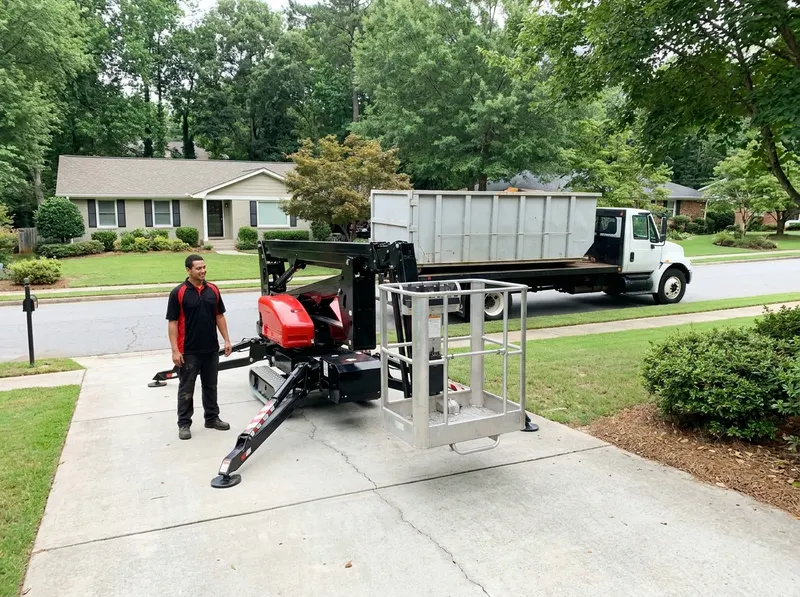
Job site delays occur when equipment dispatchers fail to commit to exact delivery windows, leaving painting crews, commercial glaziers, and siding sub-contractors waiting curbside. For elevated exterior maintenance on multi-story historic homes along Bulloch Avenue or structural commercial work off Alpharetta Highway, selecting the correct machine footprint eliminates ground-compaction problems and access bottlenecks. A 19-foot electric slab scissor lift operates with an ultra-compact 30-inch chassis width to pass through standard single interior doorways, whereas a 45-foot articulated boom requires an 8-foot footprint and reinforced outrigger ground distribution on sloped terrain. Deploying an oversized rough-terrain lift onto tight decorative paver driveways in Horseshoe Bend or Historic Roswell creates structural risk, while under-sizing reach capacity stalls fascia installation; balancing platform height against total machine weight provides the necessary clearance without ground disruption.
Site topography in North Fulton directly dictates drive-system selection. Properties across Martin's Landing, Willow Springs, and river-adjacent parcels near Riverside Park and the Chattahoochee Nature Center feature moisture-retaining clay, drainage gradients, and tight canopy clearances. In these environments, two-wheel-drive slab lifts lose traction instantly; jobs require four-wheel-drive rough-terrain articulating booms equipped with oscillating front axles and active gradeability ratings up to 45 percent. Conversely, interior renovations within commercial spaces in Centennial or retail tenant builds in Roswell Town Square necessitate zero-emission, battery-powered systems outfitted with non-marking rubber outriggers. Operators must verify that overhead tree limbs along Litchfield Hundred estates or low utility drops in Wildwood Springs leave at least 10 feet of clear approach path before the transport trailer arrives.
Executing aerial equipment staging follows a strict three-phase procedure to maintain site safety: Step 1 involves checking the path of travel for a minimum 10-foot overhead clearance and 12-foot driveway width. Step 2 requires setting high-density outrigger pads or polymer wheel tracks before unloading to protect custom aggregate concrete and paver joints from point-load cracking. Step 3 is an on-site walkaround confirming battery charge voltage or fuel tank levels alongside current annual inspection logs before the machine is handed over to the job supervisor.
Every job gets a firm, written price after a free on-site visit.
Tell us about your aerial platforms job in Roswell and we'll send a clear, written quote, usually the same day.
 Summit Waste Dumpster Rental